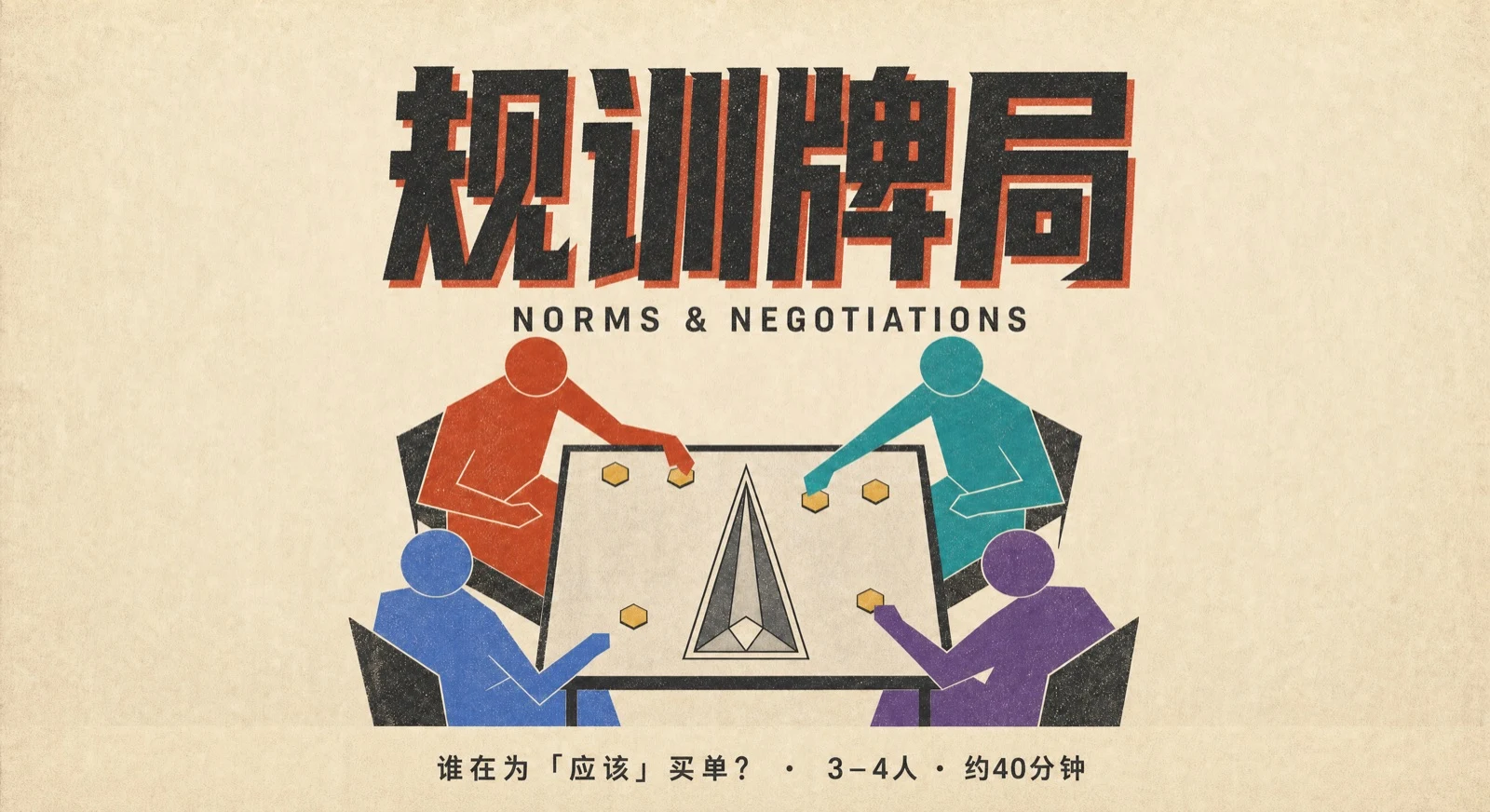
Norms & Negotiations
A tabletop game about who pays for “should”.
01 / Context
We usually describe choices as personal. But by the time an option appears, norms have already priced it.
I wanted players to feel that distribution — not sit through a lecture about it. The game turns “should” into something you can negotiate, refuse, or quietly pass on to someone else.
02 / What I did
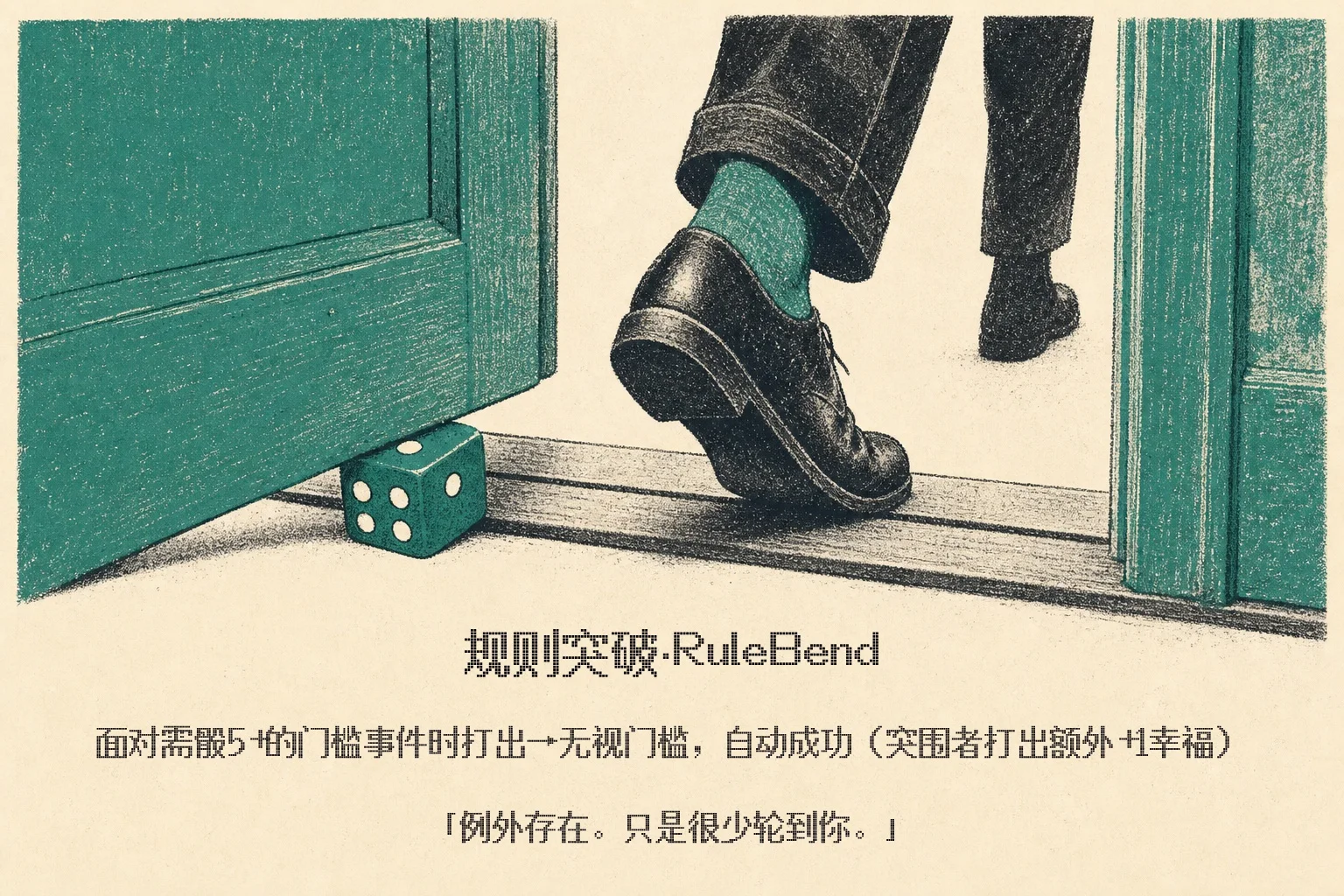
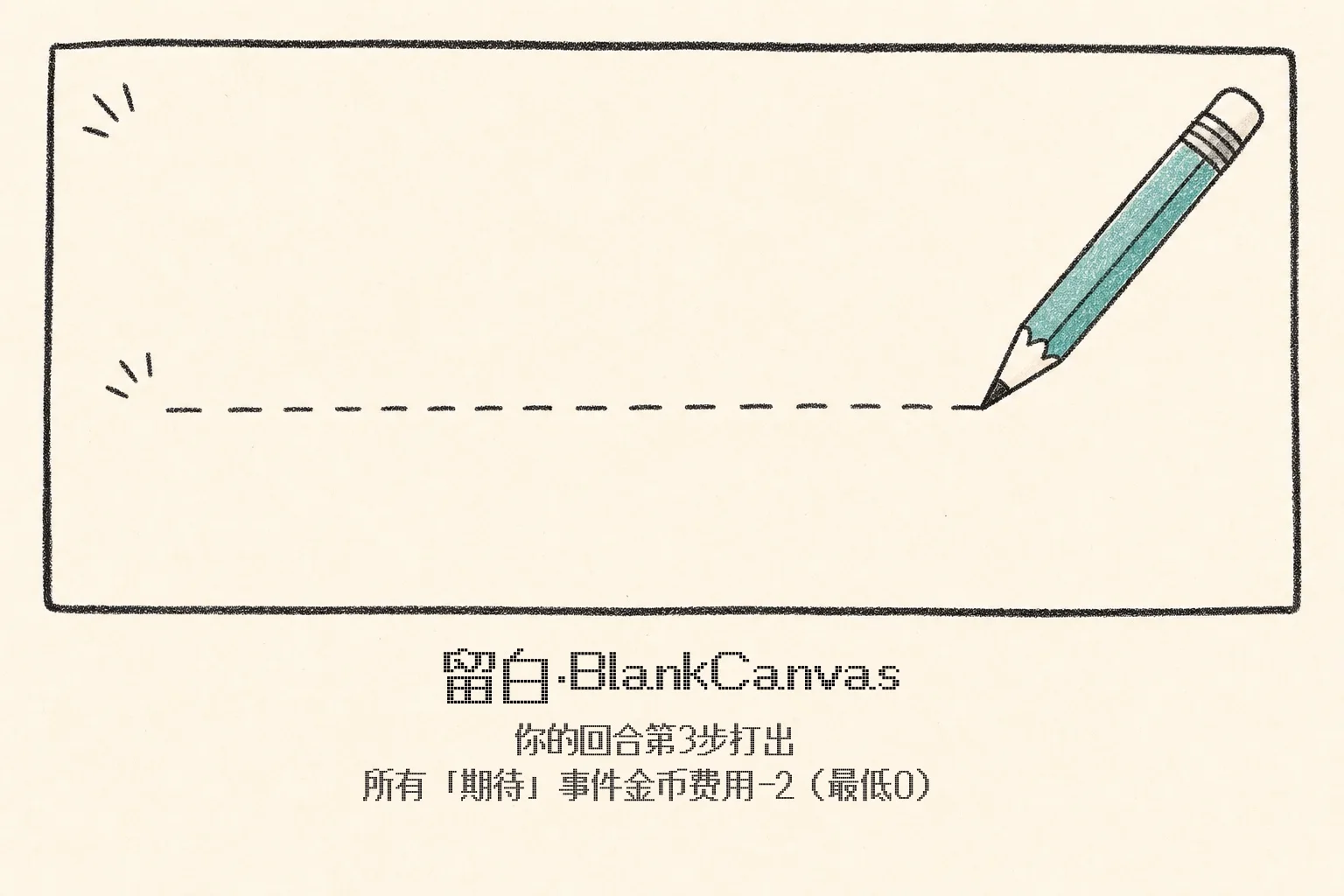
I designed the system. Four social positions. Thirty-six Life event cards. Twenty-four secret Breakout cards. A shared pressure track. Eight rounds. One rulebook.
The point was not to illustrate a theory. It was to make a small machine where players could disagree about what a cost is, who should carry it, and whether a rule can be rewritten.
03 / How it plays
Each turn starts with a Life event. Then a player chooses a standard action, may play one secret Breakout card, and checks the consequences.
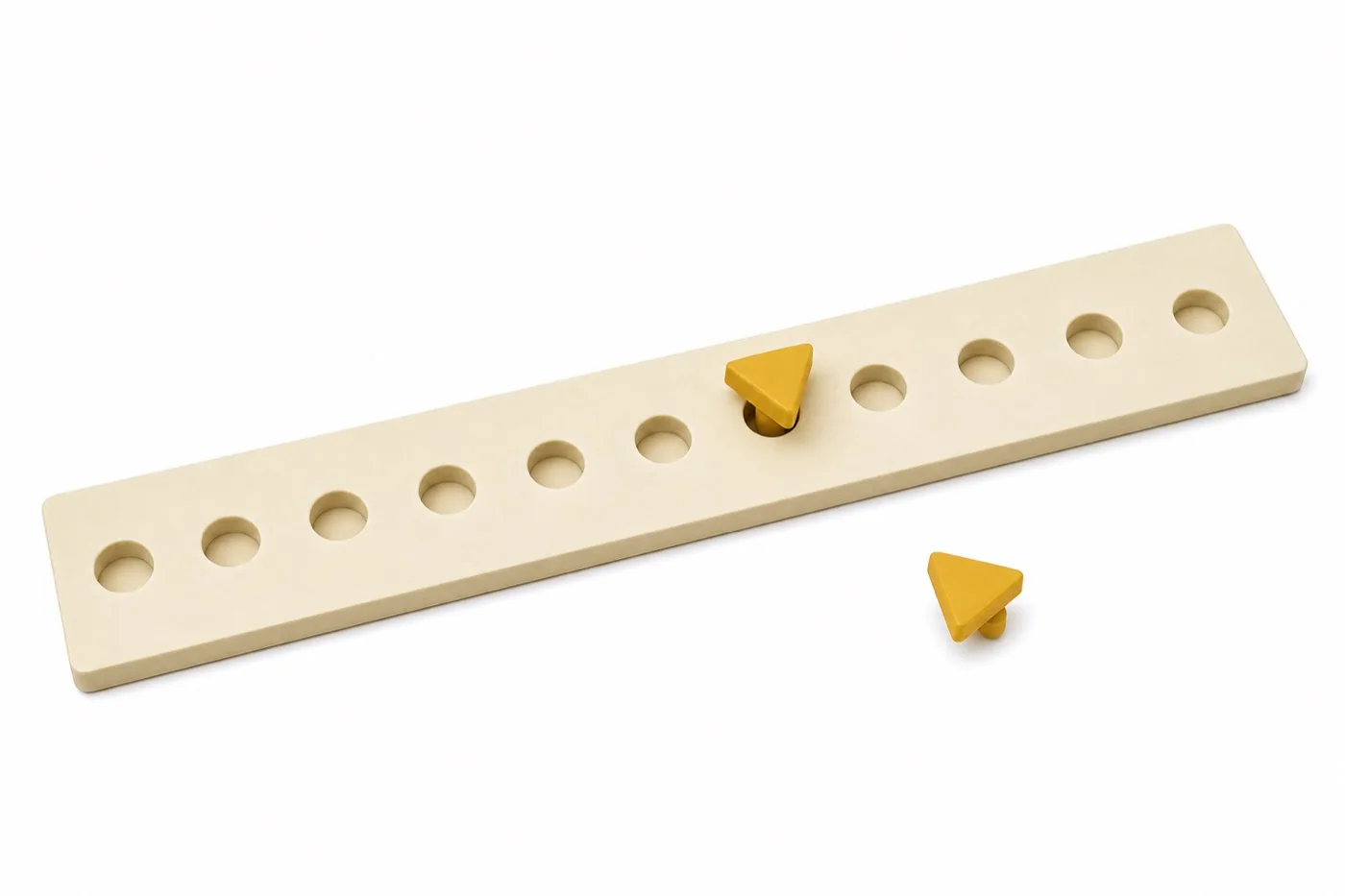
Pressure is shared. A choice that protects one person can make the room tighter for everyone else. That is the part I care about: the moment a private decision becomes a public atmosphere.
04 / What changed
The project now exists as a complete prototype: rules, cards, box, and a visual system. It moved from an argument into a system that other people can enter, misread, and re-rule.
I am not claiming an impact yet. The next thing to test is whether the table changes what players notice after they leave it.
05 / What I’m asking now
Can a game make a norm visible without turning it into a quiz? Can the pleasure of negotiation survive the seriousness of the subject?
If you want to playtest the next version, say hello.